Vegetable tanned leather: the options
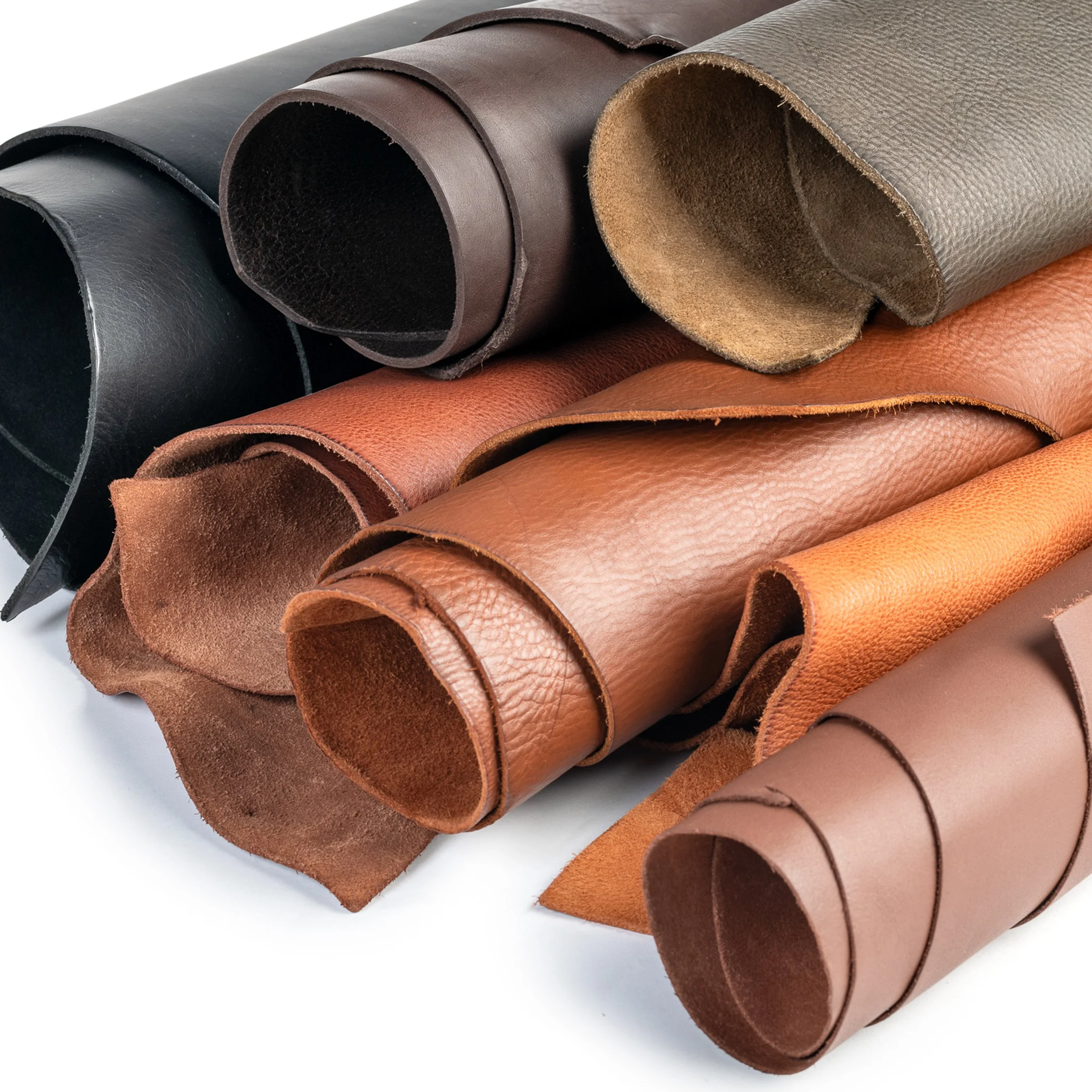
Selecting leather can be great fun and I work with a range of hides at any given time so you can request swatches/samples to compare and contrast. I’ve set out some of my most popular leathers below, with a description that gives a guide as to the products they are best suited to.
Full Grain Leather
#
Hard Leather
#
Tumbled Leather
#
Full Grain Leather # Hard Leather # Tumbled Leather #
For reasons of texture and robustness, vegetable-tanned leather lends itself very well to hand-stitching, which is what I do. For millennia, it been produced using natural tannins (the word may derive from the Latin ‘tannum’ = oak bark, but some say it’s from Medieval French…….but then again, recollections may vary….). Either way, the world’s oldest surviving (vegetable-tanned) leather footwear was found in a cave in Armenia, dated to c. 5,500 years ago.
It is available in a range of thicknesses and finishes and these have an impact on how the material performs. For example, soft textured leather works incredibly well for bags or pouches where we want some ‘give’, but where you need structure for eg belts, log baskets or fishing reel covers, I’d recommend a hard leather.
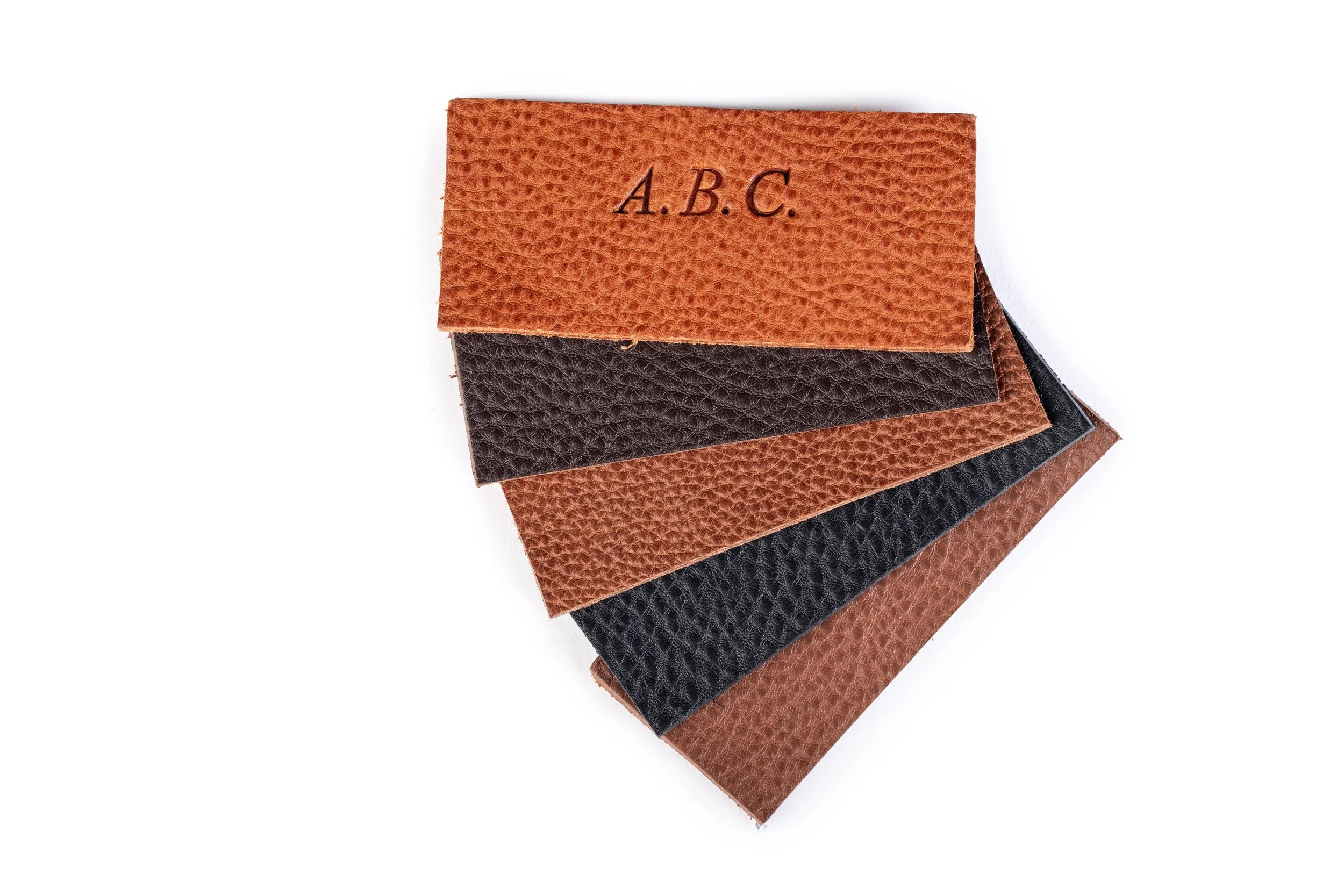
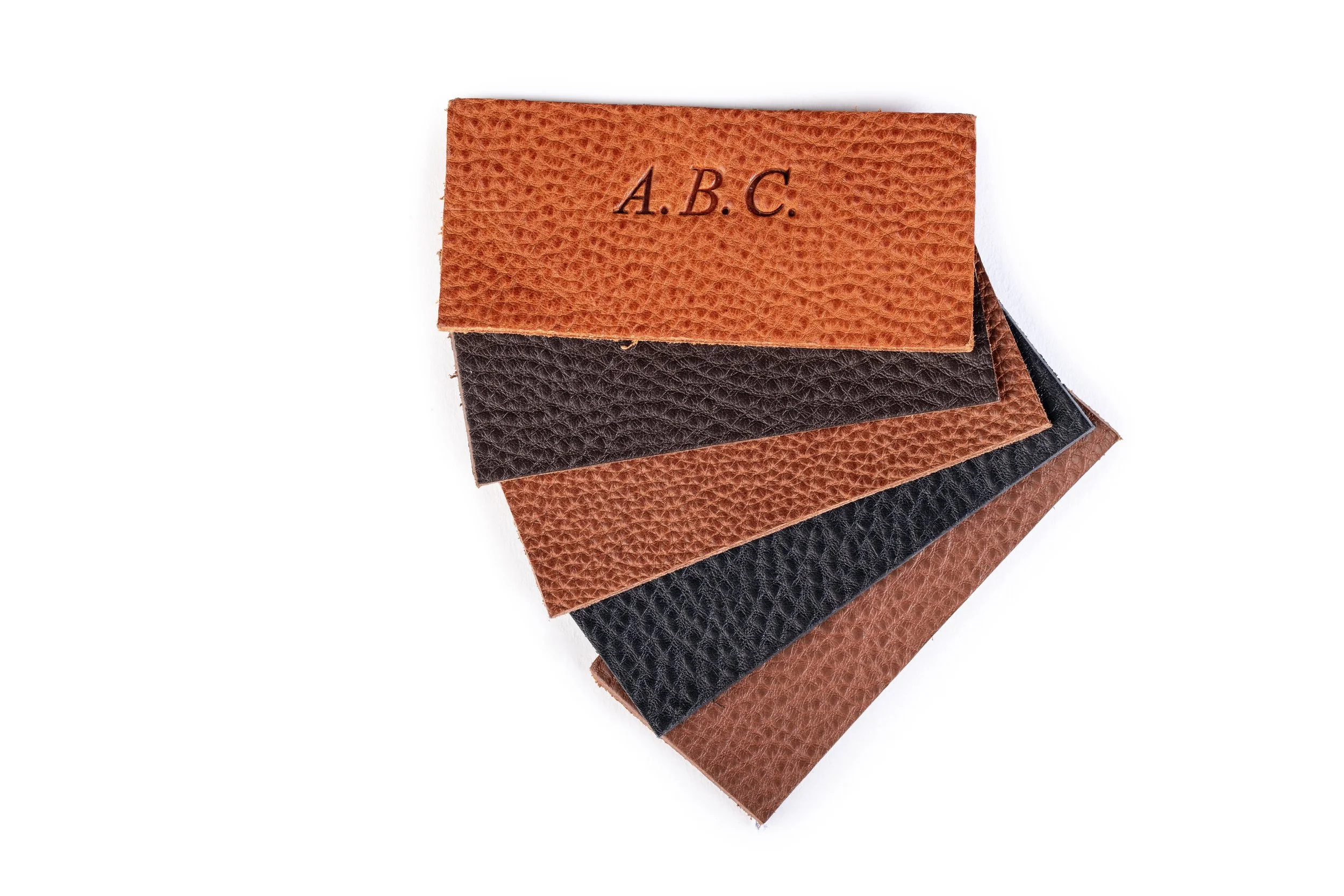
I’ve divided my offerings below into Hard and Soft Leather. Hard leather tends to be 3mm to 3.5mm deep, with Soft Leather either 2mm or 3mm thickness, depending on the job in hand. I’ve ‘blind’ embossed each swatch so you can see how personalisation might look on the various samples as it varies from leather to leather. The embossing is done by hand using brass letter/numbers and a hammer.


Soft Leather
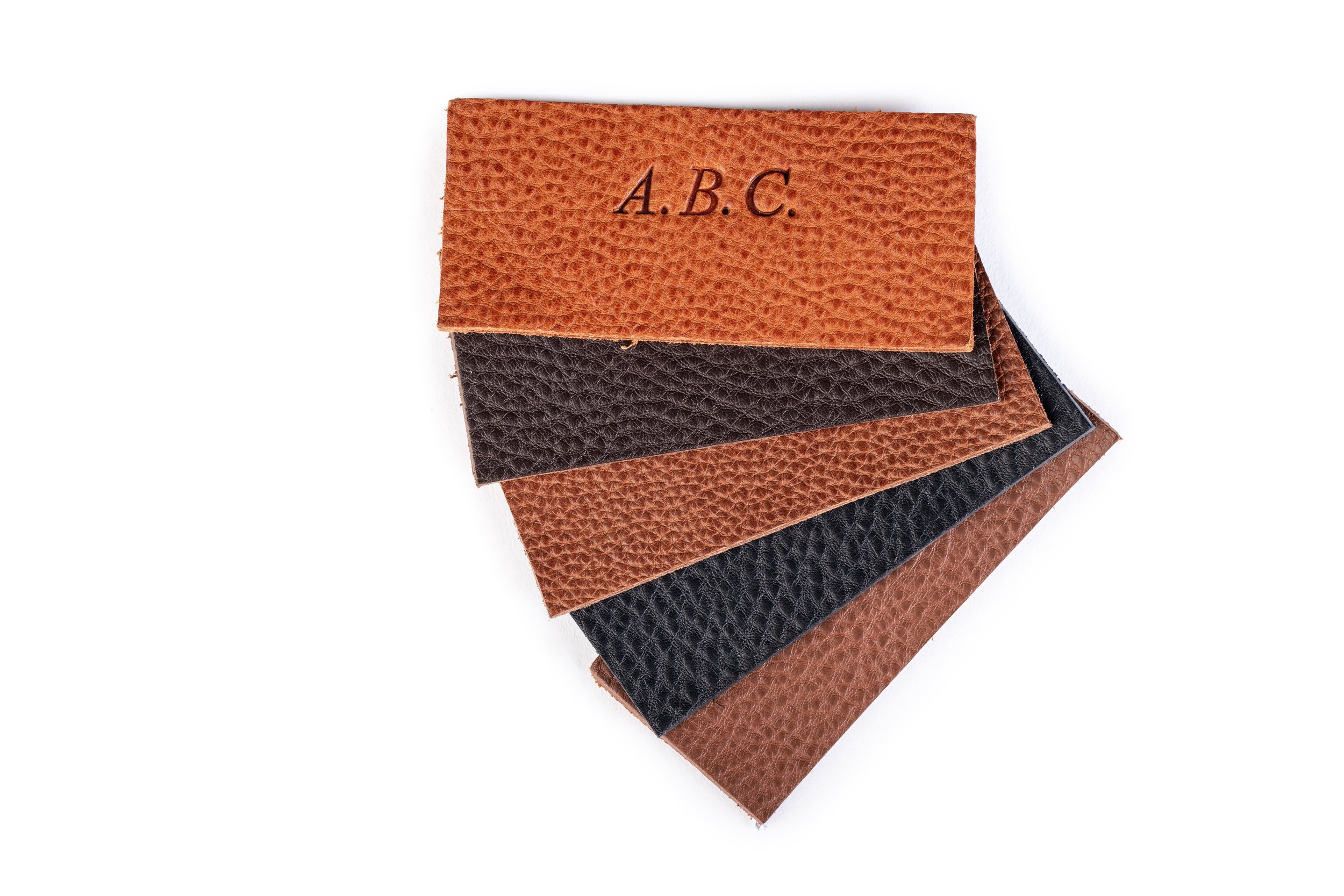
Fox Red Soft
From the shoulder of the animal, this full grain Italian leather has been milled and tumbled to give it a lovely texture. It comes in 2mm and works really well in Weekend Bags, Tote Bags, Salmon Fly Pouches and Washbags.
To follow